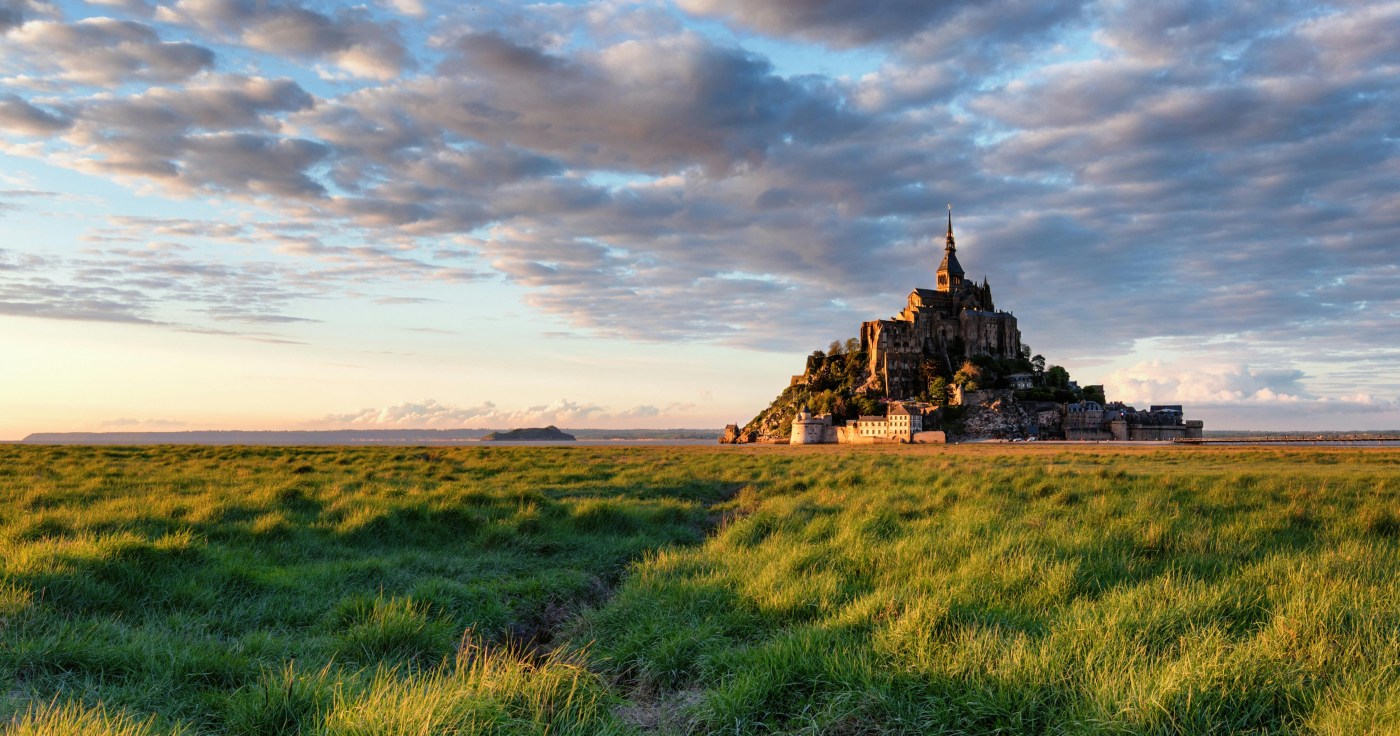
I’ve always dreamed of writing from a castle in France or an 18th-century renovated Victorian house in New England overlooking the sea. Does that surprise you?
Don’t all writers?
I am not anywhere near that dream. Instead, I am in a coffee shop in a suburb of the larger Denver metro area. Don’t get me wrong – it’s beautiful here. Some days are stunning! When I look to the west and see the Rockies, it brings tears to my eyes. I will never regret living here, but like most humans, sometimes, it’s not enough.
And the big city noises do not fuel my writing.
Why do writers crave solitude and beauty? Speaking for myself, nature inspires me. It reminds me that I am just another living being in the midst of mesmerizing mystery. That, for whatever reason, inspires me to write. And without solitude and nature, writing feels forced.
But why is that? Why do we dream of being alone in a beautiful setting with our thoughts? The occasional animal is a good companion, but never do we daydream of another person refilling our coffee or rubbing our feet (at least I don’t) while writing. We want solitude.

Solitude is needed to write well. Studies show that choosing to write alone in a calm, anxiety-free zone enhances creativity. It inspires your inner voice to emerge so you can write freely without internal judgment. It is needed to make sense of the world and hear ourselves think. Without solitude, I think we crumble.
I think we feel anxious.
Some of us listen to music when we write. I do. I listen to deep focus classical piano or guitar; the music calms me and helps me concentrate. Maybe I have convinced myself that it does, but nevertheless, it is what I need to suck me into the writing zone, in the right frame of mind. In that sweet spot.
Writing in solitude – with or without music – matters.
Pondering about these things made me wonder if some of my favorite, well-known writers felt the same and where they wrote. Here is what I discovered.
Virginia Woolf

I suppose the most famous 20th-century writer who wrote a book about how important it was to have a solidified place to write was Virginia Woolf in her famous essay, A Room of One’s Own. Woolf wrote this piece for women, who, at the time, were submerged in never-ending “women’s work” (chores and the like), and did not have a place of their own to write (and think). She craved alone time to write. She coveted a space of her own so much that she wrote an essay with the title of what she craved. Writing from her homes in London and Sussex, Woolf used a plywood board as a writing surface and wrote with pens in notebooks, as many writers did in her time. She also used different colored inks to emphasize different characters and scenes.
Virginia Woolf eventually created a “room of her own” in her country house in Sussex. There she wrote about feminism, social class, and the impact of societal expectations on women. She wrote nine novels, four short stories, essays, and other works – both fiction and nonfiction. The essay, A Room of One’s Own, a classic, is studied in literature classes in universities and colleges to this day.
“All I could do was to offer you an opinion upon one minor point—a woman must have money and a room of her own if she is to write fiction.”
– Virginia Woolf
Woolf drowned herself in a pond near her home in Sussex, England, in 1941. It is theorized that she was most likely bipolar.
Stephen King

The exceptionally famous 20th and 21st-century writer, Stephen King, needs no introduction. A room of his own? More like a few mansions of his own! King spends half of his time in Maine in his house on the hill overlooking the Atlantic, and the other half of his time in Florida, at his mansion with a view of the Gulf of Mexico. What bliss, right?
Stephen King knows the power of writing consistently in solitude and what that discipline means for a writer. No argument here. In case you have never read Stephen King, here is a list of his many books, in order.
“When asked, ‘How do you write?’ I invariably answer, ‘one word at a time.’”
– Stephen King
As of July 2025, King is very much alive.
Francois-Marie Arouet (Voltaire)

Voltaire, French philosopher, Enlightenment writer, and the 18th-century freedom-of-thought warrior, defied his father and wrote plays, poems, essays, scientific expositions, and histories instead of attending law school. You’ve got to appreciate the man – writing was his life, and he wrote in Paris, the city that inspired him. Prolific and ahead of his time, Voltaire was exiled and imprisoned due to his controversial writings. He chose exile instead of prison so he could continue his craft (I imagine most writers faced with those two choices back then would have done the same).
A strong advocate of the separation of church and state, freedom of religion, and freedom of expression, Voltaire’s writings challenged the status quo. Best known for his satirical novella, Candide, in which he criticizes religious hypocrisy, Voltaire was bold and unapologetic. His writings continue to be studied in universities worldwide.
“Writing is the painting of the voice.”
– Voltaire
Voltaire died on May 30, 1778, in Paris, France. He was eighty-three years old.
Henry David Thoreau

Unlike Voltaire, Henry David Thoreau appreciated the creativity and solitude that come with writing around nature and not in a big city.
Thoreau’s classic Walden, or A Life in the Woods, is a classic. But when it was first published on August 9, 1854, it sold just around 300 copies per year. The American transcendentalist writer’s work is a first-person account of his experimental time of simple living at Walden Pond in Concord, Massachusetts, starting in 1845. The book explores Thoreau’s views on nature, politics, and philosophy.
Thoreau was a twenty-seven-year-old Harvard graduate when he moved to Walden. He built a simple 10-by-15-foot cabin along the shore of a pond, a mile from the nearest neighbor, on land owned by his friend, poet Ralph Waldo Emerson. After spending over two years in that small space in the woods, in complete solitude except for the occasional forest creature, Walden was the result. If you have not read this book, I highly recommend it if you are a fan of mid-19th-century American prose. It’s worth it!
“I went to the woods because I wished to live deliberately, to front only the essential facts of life, and see if I could not learn what it had to teach, and not, when I came to die, discover that I had not lived.”
– Henry David Thoreau
Henry David Thoreau died in 1862 at the young age of forty-four of tuberculosis.
Silvia Plath

Sylvia Plath, renowned poet and author, was best known for The Colossus and Other Poems, Ariel, and her only novel, The Bell Jar, a semi-autobiographical work that depicted her journey with mental illness. Writing on themes of identity and the role of women, death and depression, mental illness, creativity and destruction, societal norms and personal trauma, Plath uses nature as a metaphor for emotional states in her poetry. She was a master of conveying emotional intensity and honesty.
Having attended Smith College and Cambridge University, Plath wrote in Boston, London, at an artist colony, and in other locations. Unlike Virginia Woolf, she did not have a room of her own, but was able to write while traveling, which inspired the rawness and brilliance in her work.
“Poetry is a tyrannical discipline.”
– Silvia Plath
Writing about death and believing it is an escape, Sylvia Plath committed suicide in London in 1963 by turning on the oven and waiting for the carbon monoxide. She was only thirty years old. Her work, The Collected Poems, won the Pulitzer Prize in 1982.
Walt Whitman

Walt Whitman, considered one of the best poets in American history, needs no introduction.
Whitman’s most famous work, Leaves of Grass, is a decades-long compilation of his most creative poetry. Walt Whitman’s work broke molds, was controversial at the time, and emphasized bold, inclusive views of humanity, portraying Americans as a diverse group of individuals. He wrote about democracy and identity. He honored everyday people such as farmers, soldiers, workers of all kinds, people of all races, and even women in his writing. Other themes in his work are war and suffering, sensuality, spirituality, and transcendentalism.
From 1823-1862, Whitman lived and wrote in Manhattan and Brooklyn. With an intimate knowledge of New York City, Walt spent hours watching and listening to the sights and sounds of the bustling city, which inspired his work. He also established the newspaper, The Long Islander, when he worked as a journalist and editor.
“By writing at the instant, the very heartbeat of life is caught.”
– Walt Whitman
Walt Whitman died at home from pulmonary emphysema in 1892 after living seventy-two full years.
Joyce Carol Oates
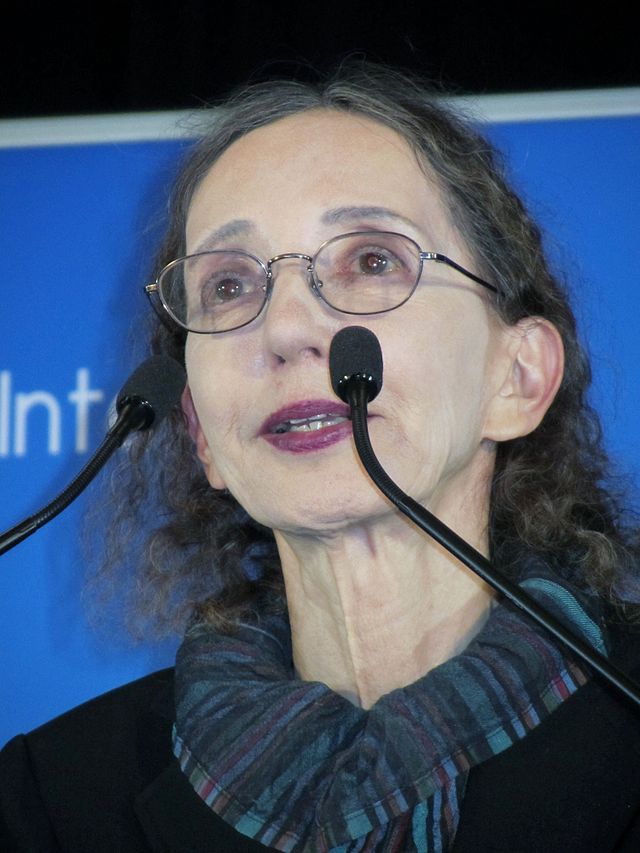
One of the 20th and 21st centuries’ prolific writers, Joyce Carol Oates, is a novelist and fiction writer.
Joyce’s novels explore a variety of subjects and themes such as violence in American life, identity, gender, and class. She also writes about trauma and psychological complexity. Her books are mesmerizing, and her characters well-developed and raw. Similar to Walt Whitman, Oates writes about social class, identity, and inequality, but takes it a step further and includes themes of feminism, patriarchy, human behavior and its complexities, and what lies beneath American life.
If you have ever picked up a Joyce Carol Oates novel, you know they are thick and rich. I was first introduced to Oates in college when We Were the Mulvaneys was required reading, and I was hooked! The novel explores the disintegration of the Mulvaney family after having to recover from a tragedy and the trauma that ensues. Oates is a master at writing about the intersections of current American culture, societal norms and expectations, and psychological trauma.
It is said that Joyce Carol Oates writes at home from 8 am to 5 pm every day. She takes a break for lunch. Now that is dedication!
“Life and people are complex. A writer as an artist doesn’t have the personality of a politician. We don’t see the world that simply.”
– Joyce Carol Oates
Oates has written over seventy novels and sixteen short stories. She also writes poetry. As of July 2025, Joyce Carol Oates is alive and writing.
Agatha Christie

I owe my writing life to Agatha Christie, the unabashed, prolific English fiction writer of the mid-20th century.
I decided I wanted to be a writer (a novelist) after reading one of Agatha Christie’s murder mysteries, Postern of Fate. I don’t remember the plot now, but I remember that I could not put down this book! I loved the English prose, and this was the first time I learned how amazing reading is. I could not get enough, so I read more of her books.
Christie is famous for writing sixty-six detective novels and fourteen short stories. Her work features the character, Hercule Poirot, a French investigator who uses wit and sophisticated vernacular to entertain readers, and Miss Marple, the female detective in the Miss Marple series. Agatha is considered the most famous mystery writer in the world and is one of the best-selling novelists of all time. I suppose her most famous novel is Murder on the Orient Express, a story made into a movie in 2017. (Yes, of course, I’ve watched it!)
“Writing is a great comfort to people like me, who are unsure of themselves and have trouble expressing themselves properly.“– Agatha Christie
After a long writing life and career, Agatha Christie died in 1976 in her Winterbrook house in the UK, where she wrote most of her novels in what I assume was a room of her own.
I was only twelve or thirteen when I decided I wanted to be a writer. Once older and like many writers, I got a “real” career and learned that writing, unless you were Agatha Christie or Stephen King, was not the best way to make a living.
I worked in the travel industry for most of my career in different positions, mostly having nothing to do with writing. In some jobs, however, I got to be the writer, editor, or proofreader. In my thirties, I graduated from college with an Associate’s Degree in General Studies and then obtained my Bachelor’s in English Writing. Thrilled to spend any time I could at the University, I immersed myself in the British, American, world, and minority literature I studied, even if society does not deem it worthwhile. I learned how to think critically and analyze, which is an immeasurable, needed skill, especially in a world full of propaganda. After graduation, I pursued a teaching position that fell apart (a story for another article) and then went back to the travel industry to a new version of my old job with the hope of someday writing a novel (or two). After 2020, I managed operations for a local nonprofit, an experience I will always cherish. Today, I am a freelance writer and blogger, and I write because I need to write.
I write because it is who I am. Can you relate?

Well, I’m not in a cabin in the New England woods like Henry David Thoreau, nor am I in a Victorian house overlooking the ocean in Maine like Stephen King. I am also not in the middle of a bustling city like Paris like Voltaire, but a girl can dream and still write. I do have a room of my own at home where I write, but I also like to venture out. What I truly want is to sit in a plant-and-books-decorated office in a house on a cliff, alone, sipping my coffee or tea, overlooking the sea that drowns my mind with an influx of ideas and comfort. What bliss!
But for now, the coffee shop will have to do.
© Copyright Vilma G. Reynoso 2025
Discover more from Vilma G. Reynoso
Subscribe to get the latest posts sent to your email.


.jpg)
_en_1718_-_P208_-_Mus%C3%A9e_Carnavalet_-_2.jpg)


Very interesting and informative. Thank you for the inspiration!
LikeLike
Glad you enjoyed it!
LikeLiked by 1 person